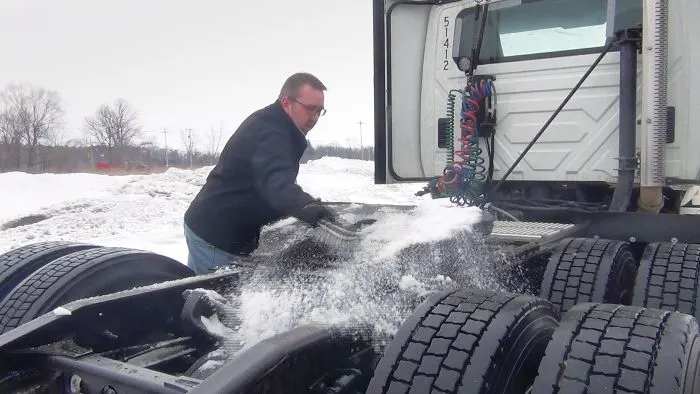
Few components on a prime mover are as important to the truck and trailer connection as the fifth wheel. It carries significant loads while allowing the trailer to articulate as the vehicle turns and travels across changing road surfaces.
For Australian operators covering long distances and working under demanding conditions, regular maintenance of fifth wheels is an essential part of keeping combinations operating safely and reliably.
Keep the coupling area clean
Road grime, dust, old grease and other contaminants can accumulate around the coupling mechanism over time. This is particularly common for trucks travelling on regional roads, accessing construction sites or operating in dusty industrial environments.
Regular cleaning makes it easier to inspect the fifth wheel properly and identify worn or damaged components that could otherwise remain hidden.
A clean coupling area also makes lubrication more effective by preventing fresh grease from simply mixing with accumulated dirt.
Lubrication does the heavy lifting
The contact surfaces between the fifth wheel and trailer experience substantial friction and movement. Correct lubrication helps reduce wear and allows the trailer to articulate smoothly.
Operators should follow the lubrication requirements for their specific equipment rather than assuming that more grease is always better.
Routine servicing of fifth wheels should include checking that lubrication is reaching the necessary contact points and that grease has not become heavily contaminated.
Watch the locking mechanism
A secure connection depends on the locking system operating correctly around the trailer kingpin. Components can wear over time, particularly on vehicles completing frequent trailer changes.
Drivers and maintenance teams should look for unusual movement, difficulty coupling or changes in the way the locking mechanism engages.
Any suspected wear should be investigated promptly. Continuing to operate with damaged or excessively worn coupling components can increase stress throughout the connection.
Check mounting points
The fifth wheel does not operate in isolation. Mounting brackets, fasteners and surrounding components all contribute to the integrity of the coupling system.
Australia’s long distances and variable road conditions can subject these areas to ongoing vibration. Inspections should therefore include mounting hardware and the surrounding structure, not simply the coupling plate itself.
Cracks, loose fasteners or unexpected movement need to be addressed before the vehicle returns to normal operation.
Build maintenance around the application
Maintenance intervals should reflect how the truck is actually used. A prime mover travelling predictable highway routes may experience different wear from a truck regularly entering freight yards, regional properties or rough access roads.
Vehicles that complete frequent coupling cycles may also require closer monitoring.
Well-maintained fifth wheels can support smoother operation, dependable coupling and longer component life. Regular cleaning, lubrication and inspection give Australian fleets a better opportunity to identify wear before it becomes an expensive roadside problem.